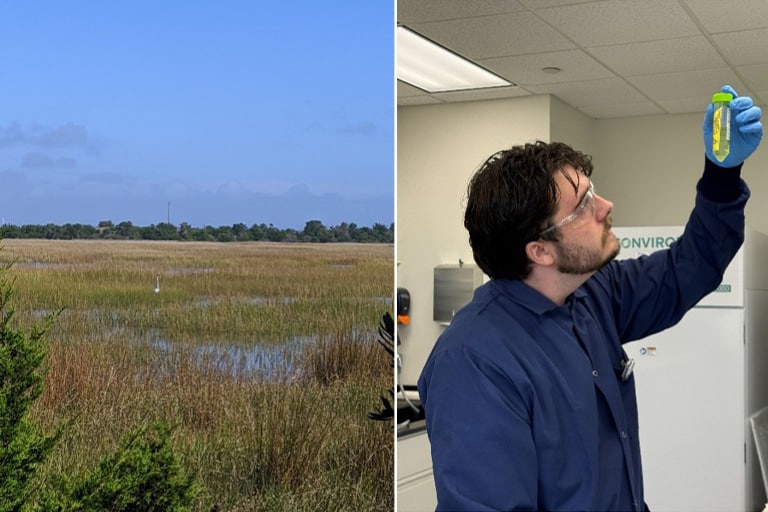
Our lab conducts research across a broad range of topics related to environmental radioactivity and radioecology. Some of our recent major research themes are highlighted here.
Applying the Sentinel Species Approach for Radiological Contaminants
The sentinel species approach is characterized by four stages:
- The presence of some environmental hazard,
- The selection of an appropriate sentinel species,
- The measurement of some detectable response(s) in the sentinel, and
- The making of an informed decision based on these responses.
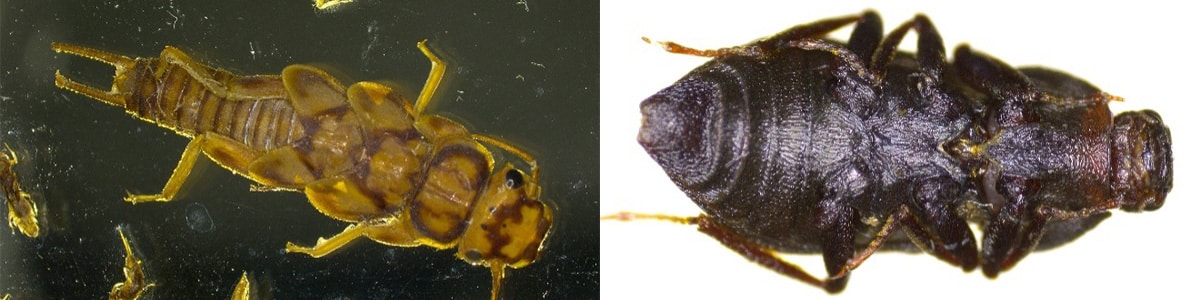
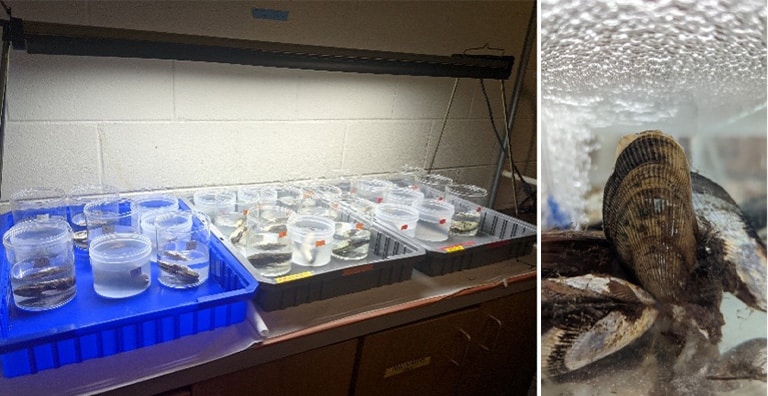
The goal of this approach is to facilitate informed decisions to protect both ecological and human health. We focus on invertebrate sentinel species which live at the aquatic-terrestrial interface such as filter-feeding mollusks or benthic arthropods.
Biogeochemistry of Radioactive and Emerging Contaminants at the Aquatic-Terrestrial Interface
Our lab monitors and quantifies the mobility and bioavailability of various pollutants across sediment and water column boundaries, with particular focus on:
- The role of environmental parameters such as sediment organic material or tidal inundation on metal behavior and
- The bioaccumulation of these contaminants into plants and invertebrates.
These studies help us predict the fate and transport of contaminants in the environment to inform environmental monitoring, remediation strategies, and ecological risk assessments.